
Dalai Lama Inaugurates Buddha Statue During Visit to Ladakh, India
The Dalai Lama inaugurated a 106-foot-tall Buddha statue during his nine-day visit to the Himalayan region of Ladakh. The statue of Buddha Maitreya is at a monastery in India’s Jammu and Kashmir State.
Hundreds of Buddhist followers from around the world traveled to see the Dalai Lama.
[Omar Abdullah, Chief of Jammu and Kashmir State]:
“Your arrival here is a very significant thing for us. Just by sitting beside you, there is a feeling of calmness. You came to our land and prayed for the people of this region, for peace and brotherhood. We do not wish for anything more than this.”
The statue is the tallest in the Ladakh region, which has a significant population of Buddhist followers. The statue took six years to complete and cost 30 million rupees, or more than 600-thousand dollars.
MP seeks Central aid to clean Buddha Nallah
Ludhiana MP and the national spokesperson of the All India Congress Committee, Manish Tewari, has sought funds to clean the Buddha Nallah under the National River Conservation Plan. Tewari, who recently led a delegation to Union Minister of State for Environment, Jairam Ramesh, requested him to play a proactive role in it.
“Although water is a state subject, the Central government can supplement these efforts by providing both technical expertise and robust oversight in utilisation of funds,” he said. He also requested Ramesh to ask the Punjab government, as to where the Rs 50 crore, sanctioned by the Planning Commission for clean up of the Buddha Nallah to the state, has been spent. He also requested the minister to visit Ludhiana for an on-the-spot assessment of the Nallah.
He has tentatively scheduled his visit for August 14 to assess the implementation of various schemes for conservation project connected to the cleaning of the canal. Tewari quoted Ramesh as saying that he will bring along some officials and experts from his ministry.
Devout pilgrims worship huge Buddha thangka in Tibet
A monk looks at the thangka during the annual thangka unfurling ceremony at Ganden Monastery in Lhasa, capital of southwest China’s Tibet Autonomous Region, July 25, 2010. Built along the slopes of the Wangbori Mountain, Dagze, Lhasa, the Ganden Monastery was the original monastery of the Gelug sect of Vajrayana Buddhism, founded by Tsongkhapa in 1409. Thousands of pilgrims gather here each year to worship a huge appliqued thangka that depicts the Buddha during the festival, one of the grandest buddhist ceremonies in Tibet. (Xinhua/Gesang Dawa)
Swat’s Gandhara heritage waits to be protected

The ancient sites of Swat suffer neglect and misuse. PHOTO: FAZAL KHALIQ/EXPRESS
While the majority of the ancient sites in Swat remain untouched, excavations carried out by Italian archaeologists have unearthed 450 ruins containing ancient stupas and statues of the Buddha.
In the era of the last Wali of Swat State Miangul Abdul Haq Jahanzeb, the ruins were protected and preserved. The Swat Museum was also built under his rule in 1959. The museum contains some of the finest collections of Gandhara art, including magnificent pieces of Buddhist sculpture.
But after the merger with Pakistan in 1969, the ruins, statues and stupas became permanent victims of neglect, jeopardising the historical and valuable heritage of the area.
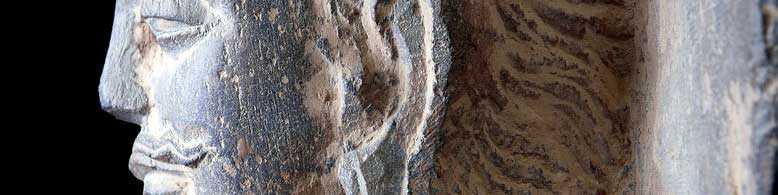
One of the most famous Buddhist sculptures in the area is the Buddha of Jehanabad, second only to the Buddhas of Bamiyan in Afghanistan, many say. A symbol of Gandhara heritage, the statue is the second biggest in the region.
ASIAN ART DEALERS NEW YORK PRESENT EXCITING FALL SCHEDULE OF EXHIBITIONS THROUGHOUT SEPTEMBER
Thirteen members of the Asian Art Dealers New York (AADNY) will present an exciting Fall schedule of exhibitions, focusing on a wide range of subject matter, throughout the month of September.
The specialists in Indian, Himalayan, and Southeast Asian works of art include:
Art of the Past, Leiko Coyle, Arnold Lieberman, Kapoor Galleries, Theresa McCullough, Nancy Wiener, and Doris Wiener. Chinese art, ancient through contemporary, will be shown at the Ralph M. Chait Galleries, China 2000 Fine Art, and M D Flacks, with Joan B. Mirviss, Scholten Japanese Art, and the Kang Collection Korean Art, representing Japanese and Korean art, ancient through contemporary, respectively.
CHINESE ART, ANCIENT THROUGH CONTEMPORARY
At the Ralph M. Chait Galleries, 724 Fifth Avenue, An Autumn Feast of Color: Fine Chinese Ceramics and Works of Art will showcase an array of polychrome decorated porcelains and works of art of superb quality from a private collection. One of the highlights is a very rare pair of 18th century painted ivory, jade and hardstone appliqué figures of a court lady and gentleman. www.rmchait.com
Literati Musing: Inscriptions on Chinese Paintings and Scholar Objects, will be held at China 2000 Fine Art, 434A East 75th Street. Like the contemporary Twitter, ancient inscriptions on Chinese art were the momentary (and now art historically monumental) thoughts about society, relationships, politics, and aesthetics of the literati. Karen and Leon Wender gathered together objects for the scholar’s desk and Chinese paintings that bear inscriptions by eminent scholars and calligraphers of Chinese history. The scholar’s words, literally etched in stone or wood or written with indelible ink on paper, provide clues to where they were at particular times in their lives and offer their knowledge about the object or the painting upon which they inscribe their thoughts. Among the exhibition’s highlights is an Important Scholar Rock Anhui Inkstone with calligraphy by Ding Jing, dated 1750 and a Ming dynasty poem carved onto on a soapstone seal-paste box by Deng Shiru, a very important calligrapher and seal carver from the 18th century. www.China2000Fineart.com
Kaikodo, 74 East 79th Street, presents Buddhist Lives, which includes Chinese and Japanese paintings from the 14th century to contemporary works featuring images of the Buddha along with stone and gilt bronze Buddhist sculpture. The paintings cover a wide range of styles and subjects, from an early image of Sakyamuni attributed to the Yuan-dynasty painter Yan Hui, to several paintings of lohan dating to the Ming and Qing dynasties to a “Bodhidharma Meditating” by Zhang Daqian painted in the 1930’s. The most recent works include stamped images of the Buddha by Mansheng Wang, who had a successful exhibition at the Today Museum in Beijing this summer, and a photograph by Michael Cherney of a bodhisattva from a Tang-period Buddhist cave printed on xuan paper and mounted as a hanging scroll. Japanese paintings featured in the exhibition include a large and impressive “Neihanzu” (death of the Buddha), Sesshin’s “Daruma,” Isshi’s “Kannon,” and Kano Tanyu’s “Jizo.” www.kaikodo.com
Religious edifice unearthed in old Myanmar city
YANGON, July 21 (Xinhua) — An ancient building, later proved as a religious edifice, has been unearthed in Myanmar’s old city of Pinle in Mandalay division’s Kyaukse, the official daily New Light of Myanmar reported Wednesday.
The religious edifice was discovered by a group of researchers from the Archaeology, National Museum and Library Department based in Nay Pyi Taw when they were carrying out excavation work in the area for over one month from June 6 to July 12.
The report claimed that the unearthed building is similar to some religious ones excavated earlier from ancient Pyu, Beikthanoe and Srikhattara cities.
Meanwhile, Myanmar held a paper reading session on archaeological evidences in Nay Pyi Taw early this month, aimed at enhancing research work with the sector.
The research paper reading session, organized by the Ministry of Culture, involved resources persons from Myanmar Historical Mission, National Culture and Fine Arts Universities in Yangon and Mandalay, Archaeology, National Museum and Library Department as well as a foreign academician.
In 2009, Myanmar found some more evidences on both Bronze Age and Iron Age after excavating areas in Thazi township, central Mandalay division, proving that Myanmar passed through both Bronze Age and Iron Age in the ancient time.
Buddha relics to be exhibited in Geneva: organiser
GENEVA — Relics of the Buddha will go on display near Switzerland’s western city of Geneva at the weekend, organisers said Friday.
The relics from India, Sri Lanka and Thailand are “vestiges of the body of the Buddha after his cremation in India,” the Swiss Buddhist Association said.
They will be shown in the suburb of Chene-Bougeries on Saturday and Sunday.
The items are “very rarely exhibited to the public” and expected to bring “happiness and joy to all believers,” the association said. They have already been on show at the UN headquarters in New York.
The Buddha, originally named Prince Siddhartha, died at the age of 80 and his relics became a matter of fierce dispute.
SLA installs Buddha statute in Tamil village in Mannaar district
Sri Lanka Army (SLA) soldiers have installed a Buddha statute in Pa’ndivirichchaan, a traditional Tamil village two km from Madu St. Mary’s Church in Madu Assistant Government Agent division in Mannaar district. Residents uprooted during SLA offensive two year back have been recently resettled in Pa’ndivirichchaan.
SLA soldiers have begun regular worship at the site where the Buddha statute is installed.
SLA has installed similar Buddhist shrines in Vanni after occupying it after the war on Vanni in keeping to Sri Lanka government’s intention of converting Vanni into a Sinhala Buddhist area.
1,000 year old lion statue unearthed in Cambodia
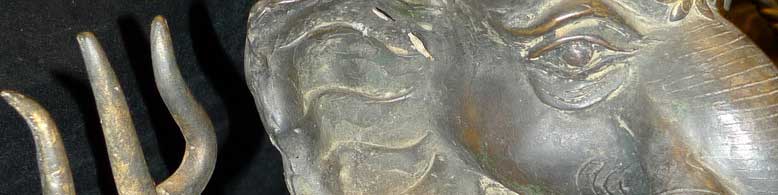
Kim Sophoan, chief of heritage office of the provincial culture and fine arts department, said that the statue of stone lion, 78 centimeters tall and about 80 kilograms in weight, was unearthed last weekend. It could be dated back in 11th century or about 1, 000 years old.
He said the statue was discovered on Saturday when the construction workers were using a tractor to renovate national road from Battambang province to Pailin province.
Soon after he was informed with the unearth of the lion statue, he said, he went up to see it and took it to a museum in Battambang province.
Kim Sophoan said it was a nice statue with good shape except both legs were broken.
After several decades of civil war, many statues and pieces of cultural heritage were lost, stolen, trafficked or covered under the ground.
For already many years, many heritage pieces have been returned, discovered or repatriated from foreign countries through bilateral cooperation between Cambodia and those countries.
Located in Southeast Asia, Cambodia is known as a country rich in cultural heritage such as Angko Wat Temple, Preah Vihear Temple, both were registered as Word Heritage Sites, and hundreds of more temples across the country as well as arts, culture and tradition.
Letting go of the past

A woman working at the museum says it is not frequented by the upper crust bajis
The museum boasts an impressive sprawling structure and despite the heat and the hurt this city has been suffering in the recent past, it still sees a spattering of visitors daily. I ask the guard, Farooq, and the souvenir shop, owner Liaqat, about how many people visit the building. They tell me the number has dropped drastically over the past couple of years. “We used to get many families but that has changed. Now we only get tourists or a couple of youngsters Sometimes one or two odd families make it in,” Liaqat tells me, adding that the situation has affected the canteen owners the most. Figures; food is usually the best barometer of how Lahoris feel in any given situation.
The building itself is a rather magnificent blend of the Mughal and the colonial. Domed and arched in the former tradition with a steady spattering of pre-colonial battle guns and the Queen’s crest in white marble budding along the boundary wall as a Unicorn and Lion glare at all visitors in an odd brand of defiance, despite having been silenced ‘technically’ for over six decades. A forgotten fountain, littered with…litter and pond scum stands testament to the administration’s lethargy but the structure itself still carries an odd, lingering aftertaste of former glory.
There is no air conditioning and the fans remain of the wall variety. The classic blue panelled ‘Royal’ fans that do little to encourage visitors to what is practically a furnace of historical artefacts, given that the museum also boasts a sun roof panelling along the entire building.
A glorious remnant of the most British-desi architecture, that takes the words ‘may the sun never set on the Empire’ far too literally for a race that gets more than its share of sun.
There are several highlights however: relics from the Graeco-Bactrian times as well as some Tibetan and Nepalese work; the Zamzama in front of the Museum, also known as Kim’s Gun from its appearance in Rudyard Kipling’s novel Kim; and the Fasting Buddha. Sculptures of the latter continue to attract Japanese tourists (and foreign aid – which is why we should be grateful they are among the few we haven’t bashed to bits). The sculpture represents the Brahman Alara Kalama. It symbolises the notion of ‘abstinence’ and the Buddhist ideal that the absolute attainment of our end is only to be found in abandoning everything.
The explanation comes from Bob from the Netherlands. Bob is perhaps the most obvious foreign tourist one is likely to come across in Lahore these days. I remind him that the city is hardly safe even for natives. Bob, who is in Pakistan for only a week, remains nonchalant.
“They (read Pakistani government) are doing what they can. No one can guard against suicide bombers all the time,” he says, taking swigs from his water bottle to keep himself hydrated. I ask him, what he thinks of the place and he says he is impressed with the collection; surprised at the scarcity of visitors and feeling a tad ‘hot’.
It is perhaps the politest way to infer that the Museum, ought to provide a more ‘friendly’ environment for visitors during the ‘summer’ vacations.
Bob tells me that he didn’t mind checking in his cell phone at the counter outside the main building but that he was surprised about the lack of security otherwise. “I saw that there were only two guards, and a female officer at the main gate and I thought either this place has been overlooked or it is safe,” he tells me, in what I simultaneously admire and scoff at as ‘foreign’ idealism. I wonder whether or not I should warn Bob about taking all possible precautions because my country is no longer ‘a safe place’. In the end, I don’t have the heart to do it. Also, I reason, he is here for only four more days. I shall keep my fingers crossed for him to make his way home safely and spread the false but fairytale rumour that ours is “a safe country, wonderful to visit”.
Asifa, one of the women working at the museum, asks if I am a journalist. When I confirm her suspicions, she says “I knew it, aap jese yahaan kam aatee hein.” Apart from being rather affronted and shocked at her implication, I ask her what she means. Asifa clarifies that the Museum isn’t really for upper crust ‘bajis’, adding “Yeh middle-class jagah hai baji.” My sense of despair is complete. Partly because I want desperately to denounce the label she has tagged on to me and mostly because I know she is right to point it out. I glance around the near empty halls of the museum, and realise that I am being stared … no, gawked at.
Apparently in this relic of reminiscence, I am the day’s headline.
I am uncomfortable as I leave the building and notice a lone, broken wheelchair by the door. I ask the guard what that is there for and he says it is to help cart around old or disabled visitors. “But it’s broken,” I remark, “Nahin ji, only one wheel is broken. It works perfectly otherwise,” he tells me. I will never, ever cease to marvel at our ability to negotiate with the facts that stare us in the face.
As I leave the grounds trying to decide whether wearing my ‘sunglasses’ will solidify my ‘upper crust baji’ image or whether I should opt for retinal scarring to fit in better, Farooq approaches me again. He tells me that security needs to be beefed up at the museum and I should ‘tell the media waalas’ that. “They are working to install cameras and check posts everywhere else but here everything stays the same.
There is a genuine fear that we could be a target, given that there are so many ‘Buddha’ statues in this museum,” Farooq tells me with a resentful sneer at meek Gautama, as if the dead pacifist messiah is to blame for the Taliban’s particular brand of ‘logical deduction’.
Farooq tells me that he feels the museum is ‘marked’ and I experience an odd tingle up my spine at my choice to re-work my column’s title to ‘Landmarked’: a decidedly risqué choice given our history.
Published in The Express Tribune, July 12th, 2010.
Exhibit displays Buddhist relics this weekend in Auburn
The cremated ashes of 26 Buddhist masters will be on display in a worldwide touring exhibit stopping in Auburn this weekend.
The remains include relics of Shakamuni Buddha - born Siddhartha Gautama 2,500 years ago and known as the Enlightened One. Buddhists believe the pearl-like crystals embody the masters’ spiritual qualities of compassion and wisdom.
The collection called The Heart Shrine Relic Tour will be open to the public Friday night through Sunday at First Congregational Church in Auburn. Admission is free.
“Visitors will be able to experience something special,” said Stan Padilla, one of the event organizers. “In the past, people have talked about experiencing peace or inspiration in the presence of the relics.”
Relics of Buddhist masters of various traditions will be on display. Ananda Lama Atisha and Lama Tsongkhapa are part of the collection. Museums, monasteries and spiritual leaders from all over the world donated the relics, according to Maitreya Project web site.
Attendees can walk into an auditorium transformed to look like a Buddhist Temple, with Chinese and Tibetan art. The relics surround a life-size golden statue of the Maitreya Buddha.
Buddhists believe Maitreya will be the next Buddha to teach the path of loving kindness. At the end of the tour, the relics will be enshrined in a 500-foot statue of Maitreya Buddha currently being built in India.
The relics will be placed at the heart of the Maitreya Buddha.
Organizers said the tour is an interfaith observance and lesson in history. “People of all faiths are invited,” said Padilla.