
China’s antique collectors driving prices through the roof
Prices for antiques in China have risen sharply over the past five years and now galleries all over the world over are waiting for the nation’s cashed-up collectors to spread the wealth overseas.
Speaking on the sidelines of the Netherlands’ Tefaf Maastricht (http://www.Tefaf.com) - the world’s largest art and antiques fair which ends on Sunday, March 21 - New York gallery director James Hennessy said that internationally things were looking up in the antique market, but all eyes were on China.
”Business is better than last year,” Hennessy told the Bloomberg news agency. “The market for Chinese art expands with the Chinese economy. There are thousands of collectors in mainland China who are seeking out works in the West. At the same time Western collectors realize they have to buy now before prices rise too much.”
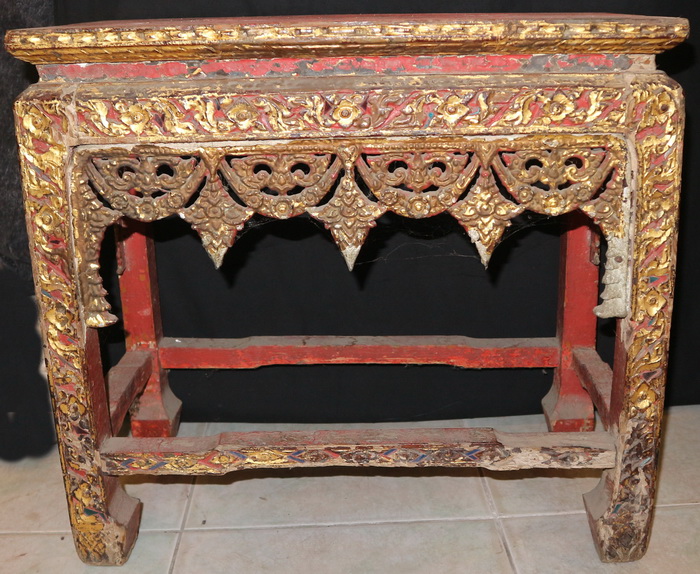
Dealers in Asia point to October last year and Sotheby’s auction in Hong Kong - when HK$85.7 million (eight million euros) was paid for an 18th century throne - as the exact moment Chinese antique collectors officially entered the big leagues.
That was a record amount, the most ever paid for a piece of antique Chinese furniture, topping the HK$36.89 million (3.5 million euros) paid for a bed of similar age at an auction in Beijing in 2008.
Both items were fashioned from “zitan'’ - or purple sandalwood - which is highly prized by Chinese collectors due to its extreme rarity and the elaborate designs ancient craftsman applied to the pieces when working with it.
A spokesperson for the Hong Kong International Art and Antiques Fair (http://www.hongkongartfair.com/) - to be held from May 27-30 - said in the past decade, trade in Chinese antiques had gone from being 90 percent Western in the 2000s, to 95 percent Chinese now.
And that the Chinese were starting to look all over the world for their antiques. “You just can’t imagine the amount of money they spend,'’ the spokesperson told the South China Morning Post newspaper.
Sotheby’s, meanwhile, has gone on record as saying that the number of their Chinese clients has increased threefold over the past decades while prices for Chinese antiques have at least tripled.
Good news all round for those already owning ancient Chinese furniture. “Market supply has dried up,'’ antique dealer Ho Hung-yung said. “People are not selling [and] the prices of the pieces keeps going up.'’
MS
Painting and Imperial Objects Highlight Sotheby’s Fine Chinese Sale
NEW YORK, NY.- Sotheby’s 23 March 2010 sale of Chinese Works of Art will feature paintings, ceramics, jades and furniture including a number of Imperial works from distinguished private collections. Among the highlights of the sale is A Fine and Rare Imperial ‘Zitan’ Stand and Base – zitan is widely recognized as one of the most luxurious of materials, so much so that it was said to be reserved only for use in the Imperial court (est. $180/250,000). Chinese painting is well represented in the auction and leading the selection is Bada Shanren’s Two Mynas on a Rock from 1692, a compelling composition from the artist’s golden period of creativity (est. $400/600,000). The auction is estimated to bring $6/8 million and will be on view from 19 March.
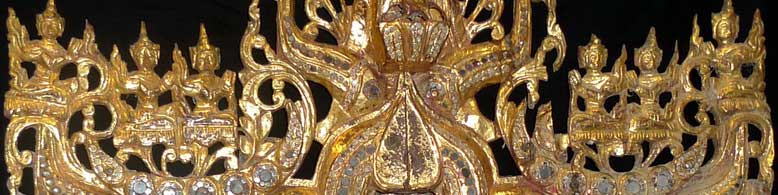
The Fine and Rare Imperial ‘Zitan’ Stand and Base (est. $180/250,000) is nearly identical to one in the Qing Court Collection, preserved in the Summer Palace, Beijing. The generous use of the thick zitan timber, and the intricately and deeply carved design, were extravagances justifiable only for imperial purposes. Used to hold jardinières or censers, the stand and base represent the very best of Qing dynasty furniture workmanship.
A Rare Imperial Tribute Guangzhou Ivory and Tortoiseshell Fan from the Qianlong Period, Qing Dynasty, is one of only a handful of such fans to have survived (est. $100/150,000). It was one of a group made in Guangzhou during the Qing dynasty as tribute gifts for the Emperor. Many that remain are in the collection of the Palace Museum in Beijing. The delicately plaited ivory set into a tortoiseshell frame and embellished with stained ivory, mother-of-pearl and kingfisher feather together create a whimsical composition of magpies among bamboo and butterflies.
Three impressive rhinoceros horn carvings are offered this season. Among them is a Large and Rare Rhinoceros Horn Cup, dating to the 16th / 17th century of the Ming dynasty. It depicts Shoulao, the God of Immortality on a crane descending to meet the Eight Daoist Immortals (est. $180/220,000). Of a magnificent size, the carving and beautiful honey tone make the figures loom out from the gently rounded surface of the cup.
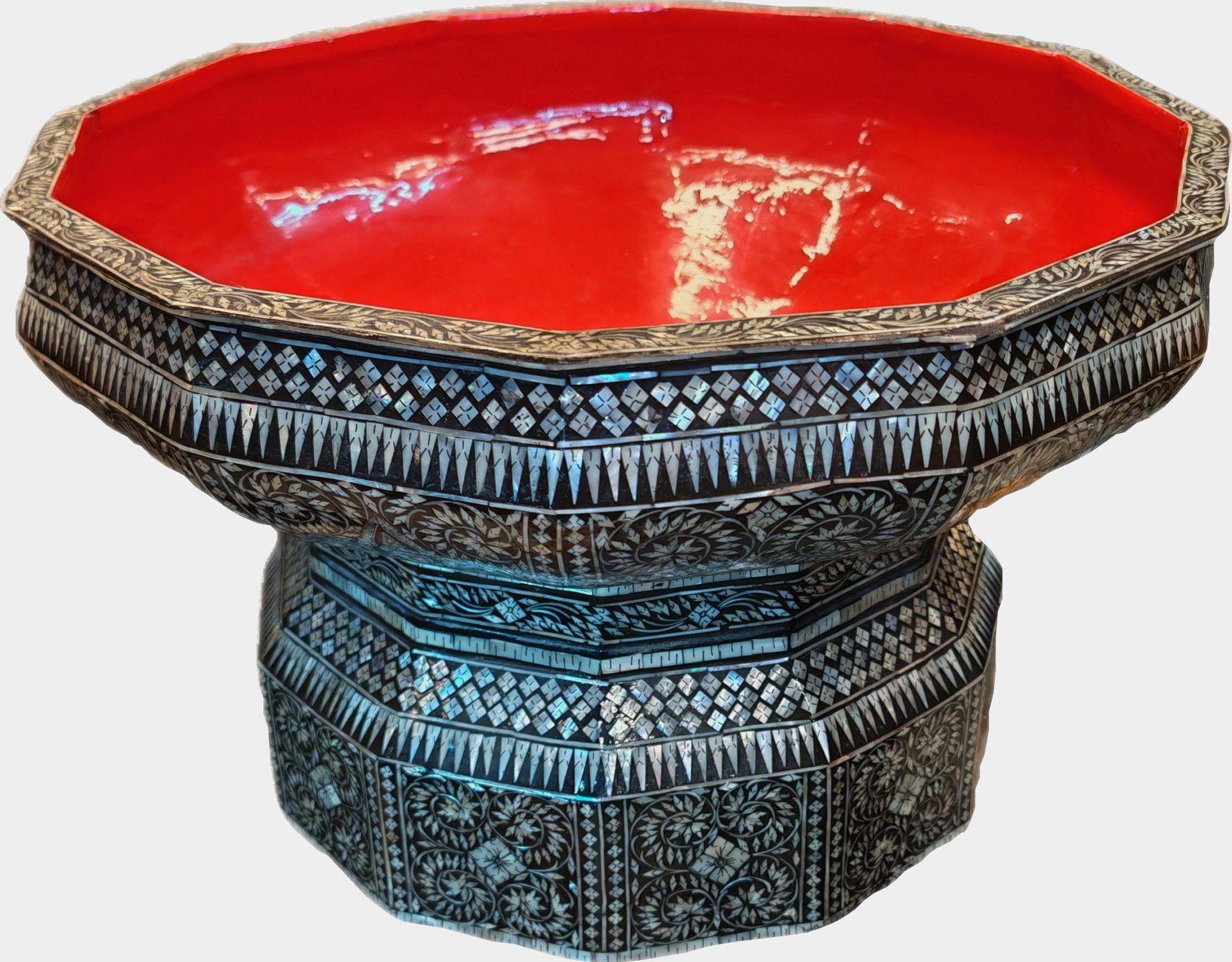
Louis Cartier, the founder of the Cartier style, was also an avid collector of Asian works of art of the highest quality. One of the many objects in his superb collection was A Red Lacquer Case with Mother-of-Pearl Inlay, 19th century, Qing dynasty (est. $30/40,000). Cartier collected mostly between 1910-1930 after which he semi-retired and ceased collecting. His passion for Asian art is demonstrated by the influence it had over his jewelry designs, many of which featured Chinese motifs, forms and shapes.
Porcelain is well represented by A Rare Blue and White Jar dating to the Xuande period (1426-1435) of the Ming dynasty (est. $80/120,000) which comes from the Collection of Alfred Guntermann. Only four of these jars are known with two in the Palace Museum in Beijing and one in the National Palace Museum in Taipei.
An Impressive Pair of Spinach-Green Jade ‘Nine Dragon’ Alms Bowls from the Kangxi period of the Qing Dynasty, depict dragons clambering up from deeply carved thick clouds (est. $120/150,000). The design of the bowls is related to a massive jade vessel from the Yuan dynasty that has been mentioned as one of the wonders of the Mongol world, having been discovered by the Qianlong emperor in a temple where it was being used as a storage container.
New archaeological find
The unearthing of another Buddhist-era site in the formerly beleaguered Swat valley comes as pleasant news.
Initial excavations by an Italian archaeology mission at Kandak and Kota in the Barikot area have apparently revealed treasures that include prehistoric rock carvings, paintings of social and hunting scenes and pottery specimens “preserved in good condition,” according to the mission’s director. The Italians deserve kudos for continuing their work under the most trying circumstances during the past many years since Swat became the scene of utter lawlessness because of militancy in the area. Indeed, Italian archaeologists are no strangers to the valley where they have had a presence since the discovery of the riveting Butkara site in the late 1950s in the backyard of the administrative capital, Saidu Sharif.
No doubt, the many foreign archaeologists, particularly the Italians in Swat and the French in Mehrgarh, Balochistan, have played an important role in preserving Pakistan’s historical treasures. Unfortunately, the same cannot be said for the role of the national archaeology department as the custodian of these and other historical sites. For instance, we have not heard of the fate of the artifacts housed in the Swat Museum at Saidu and the Chakdara Museum on the road to Dir.

Such concern is justified when one considers that a giant, 130-foot-high Buddha rock carving in Swat’s Jahanabad area was dynamited by the Taliban in September 2007. It was the tallest Buddha carving in South Asia next only to the Bamiyan masterpieces in Afghanistan, which had met a similar fate at the hands of the Taliban in that country. As has been underscored before, it is essential that we hear from the official custodians whether or not our national heritage in Swat remains in safe hands. So far there has been nothing but silence from them.
http://www.dawn.com/wps/wcm/connect/dawn-content-library/dawn/the-newspaper/editorial/14-new-archaeological-find-030-zj-10
Mahabodhi temple corpus fund crosses Rs 10 cr mark
According to Gaya DM Sanjay Kumar, ex-officio chairman of the Temple Management Committee, the Temple’s corpus fund which was about Rs 3 crore in 2007, has now crossed the Rs 10 crore mark. The temple, in collaboration with the HDFC Bank, has introduced online donation mechanism and this innovative strategy is likely to further increase the temple income. The online donation mechanism was introduced a few days back.
The efforts made to plug the leakages and ensure transparency include displaying the names of donors on the temple website and newspapers.
Besides maintenance of the most sacred Buddhist shrine, the temple donations are used for the execution of projects like regular health check up of the Bodhi tree, the symbol of Buddha’s enlightenment,. The tree is said to be a direct descendant of the original peepal tree under which Buddha realised the ultimate truth about 2,550 years back.
The sacred tree’s health check-up is conducted every six months by a group of scientists and plant specialists from the Dehradun-based Forest Research Institute (FRI). As per an MoU signed between the temple management and FRI, the Temple Management Committee has to pay Rs 6 lakh per annum to the Forest Research Institute for healthcare of the tree, which, earlier suffered from milibug disease and general malnutrition.
Part of the temple income is also spent on its illumination, a practice that has come in for criticism from plant scientists as too much light around the temple will adversely affect the process of photosynthesis, so essential for the tree’s survival.
The Temple’s Boundary Restoration Project is also funded by the temple income. Voluntary donations constitute the main part of the temple income. No entry fee is charged from visitors.
In order to augment income, the Mahabodhi Temple Management Committee has also introduced a special prayer package under which Buddha followers can meditate under the sacred tree in the night between 9 pm and 4 am and a fee of Rs 100 per person is charged for this special meditation. The temple remains closed for general visitors during night hours. The Meditation Park, established on the south eastern side of the main temple, has also added to the temple coffers. An entry fee of Rs 50 per person is charged for the Meditation Park.
TIBETAN Mandala Being Created At University of Arizona Bookstore
For the second year, Losang Samten, a Tibetan scholar and former Buddhist monk, is constructing a traditional Tibetan mandala, or sand painting, at the University of Arizona Bookstore, Student Union Memorial Center, on the U. of A. campus.
The 40 temples that define Thai history
A new book focusing on Thailand’s most notable temples hit store shelves recently, titled “Buddhist Temples of Thailand: A Visual Journey Through Thailand’s 40 Most Historic Wats”. The book explores the Buddhist temple’s historical position in Thai culture and the dynamic role it continues to play in everyday life.
The kingdom’s best-known and rare temples, such as Wat Phra Kaew in Bangkok and Wat Phumin in Nan, are highlighted in the book’s 200 commissioned photographs.
“One reason many of us are hooked on temple-hopping in Thailand no doubt springs from the fact that the monuments are simply so accessible,” says author Joe Cummings in the book’s forward. “Like your neighborhood 7-eleven, wats aren’t closed on Sundays, or Saturdays or full moon days. You don’t have to be Buddhist to enter, and in even the strictest religious settings they’re open to all, regardless of race, nationality, gender or social class.” 
Travel writing legend Cummings selected 40 temples from the more than 31,000 across the country for their unique architecture, stunning murals, revered Buddha images and historical significance. Photography is by Dan White, an experienced Bangkok-based magazine and features photojournalist.
This is the first book to cover the whole country’s temples and feature commissioned photography. It is available at Asia Books, Kinokuniya, B2S now and will be on Amazon from June.
Pictures: http://www.cnngo.com/bangkok/play/buddhist-temples-thailand-091735#
A Collection to Worship
By Marisa Bartolucci
Kandell and Rudko met in 1994, and she eventually acquired much of his collection. With his help she added to this core to assemble a magnificent shrine. Considering themselves stewards of the sacred objects, which they feel cannot yet be returned to Tibet, Kandell and Rudko have transferred the shrine to the custody of the Smithsonian’s Freer Gallery of Art and Arthur M. Sackler Gallery, where it is on view from March 13 through July 18 and where they hope it will serve as a portal into the rich culture of Buddhist Tibet and the hallowed world of enlightenment.
Shakyamuni Buddha in a Full Shrine
Shakyamuni, or “Sage of the Shakyas,” refers to the Gautama Buddha and his people, who lived in the Himalayan foothills. Framed by a bejeweled mandorla, the silver-repoussé figure was likely made during the Qing Dynasty in Dolonnor, a flourishing art center in Inner Mongolia. Mongolian and Tibetan history intertwine; it was the 16th-century Mongolian ruler Altan Khan who bestowed the name Dalai (”praiseworthy ocean”) on his spiritual adviser, the lama Sonam Gyatso. This Buddha once belonged to Theos Bernard, the first American scholar of Tibetan Buddhism.
Khadiravani Tara
This bodhisatva, her foot gently raised, is ready to help those suffering from external threat or inner dangers. Crafted of gilt copper alloy and adorned with turquoise and coral, the figure was likely made in central Tibet circa 1700 .
Padma Sambhava
The icon depicts Guru Rinpoche, the Great Precious Mentor, a mustachioed emanation of Buddha Amitabha who converted the Tibetan warrior empire into a nonviolent dharmic realm. This is part of a rare complete set of tangkas with all their brocade framing that chronicles the Dalai Lama reincarnations.
Cosmos Mandala Offering
These vessels symbolize the oblation of the entire universe to the enlightened beings. In the back is an ornate silver-repoussé vessel filled with rice flanked by eight gilded-copper presentation stands supporting the eight lucky signs. In front are seven offering vessels for drinking and washing water, flowers, incense, light, lotion and food.
Conch Horns
The Tibetans adopted the ancient Indian conch horn for use in temple orchestras and to summon monks to assemblies. This pair was likely made in Kham, in eastern Tibet, in the 18th century. They are adorned with chased, worked and richly gilded silver bordered by turquoise and corals.
“A Collection to Worship” originally appeared in the March issue of Art+Auction. For a complete list of articles from this issue available on ARTINFO, see Art+Auction’s March 2010 Table of Contents.
‘Taliban’s conversion rider stalled Japan’s Bamiyan bid’
WASHINGTON: Japan offered to hide Afghanistan’s Bamiyan Buddha statues to prevent the Taliban from destroying them, but the hardline regime instead suggested the Japanese convert to Islam, a new memoir says.
Abdul Salam Zaeef, who was Taliban-ruled Afghanistan’s most public face as ambassador to Pakistan, wrote that Japan was the most active country in pressing the regime not to demolish the 1,500-year-old statues in 2001.
He said that an official delegation from Japan, along with a Buddhist group from Sri Lanka, offered to remove the statues piece by piece and reassemble them abroad. “Another suggestion they had was that they cover the statues from head to toe in a way that no one would recognize they had ever been there, while preserving them underneath,” Zaeef wrote in “My Life With The Taliban,” just published in the US.
He said that the Japanese told the Afghans that they were forefathers of their religion and should preserve its heritage, but Zaeef said Afghans considered Buddhism “a void religion.”
Defying the intense international appeals, the Taliban spent a month using first anti-aircraft guns and then dynamite to obliterate the Buddha statues, arguing that Islam forbade idolatry. Zaeef said he believed that the destruction was within Islamic sharia law. But he wrote that the decision had “bad timing,” as it worsened the Taliban’s foreign relations.
The Taliban was ousted months later in a US-led invasion after the September 11, 2001 attacks by al-Qaida, which found a haven in Afghanistan. Zaeef was imprisoned at the US camp in Guantanamo Bay, Cuba and now lives in Kabul.
Christie’s Presents an Extensive Selection of Indian & Southeast Asian Art
NEW YORK, NY.- On March 23, the afternoon will be devoted to the classical works of Indian and Southeast Asian Art. Christie’s will offer an extensive selection of nearly 200 lots of sculpture, paintings, ritual objects, and works of art from India, Tibet, Nepal and Southeast Asia from the notable collections.
Leading the sale is a bronze figure of Uma, 13th/14th century, South India, Tamilnadu (estimate: $400,000-600,000). This well-cast figure of Uma, the second incarnation of Shakti as Shiva’s wife, is seated in lalitasana on a double-lotus base over a stepped plinth with beaded rims. From her jatamukuta to the datura flowers above her ears and the finely worked striations and fold of her dhoti, this bronze figure is an impressive example of South Indian craftsmanship and a very significant piece of South Indian art history.
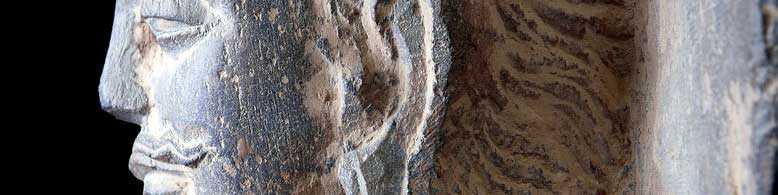
From a Private American Collection, the sale presents a highly important mottled red sandstone head of a Jina (estimate: $250,000-350,000), coming from India, Mathura, Uttar Pradesh, during the Gupta period of the mid 5th century. The lack of an ushnisha, the domed protuberance at the top of the head, indicates this is a rare example of a head of a Jina, as opposed to of a Buddha, which is more commonly found. Its ovoid face, elongated eyes, crisply carved curls and long earlobes present a highly refined sculptural ideal that would forever define the iconic prototype of an enlightened being in Indian art. This sculpture evokes a spirituality manifested in aesthetic terms.
Another notable highlight is an important gilt bronze figure of Kunzang Akhor (estimate: $600,000-800,000) from 13th century Nepal. This work was commissioned by practitioners of the Bon religion, which descends from the ancient beliefs of Tibet before the arrival of Buddhism in the 8th century. The figure is one of the most significant and largest Bon sculptures of its kind, with strong modeling of the upper body and powerfully executed hands and feet featuring unusual details such as lotus flowers and finger rings.
Additional important sculptures include a bronze figure of Balakrishna (estimate: $150,000-250,000), a depiction of the dancing, Krishna child, a popular image in South India from the 12th century, Chola period; a gilt bronze figure of Tara (estimate: $120,000-180,000) of Tibeto-Chinese origin and from the 15th century; a rare imperial gilt bronze and cloisonné figure of Amitayus (estimate: $100,000-150,000) also Tibeto-Chinese origin and from the 18th century; and a rare Khmer stone figure of Vishnu Resting on the Serpent Shesha (estimate: $35,000-50,000) executed in Baphuon style from the Angkor period, 11th century.
Vietnam to receive ‘Lord Buddha’s sari’ from India
The treasure-one of the purported relics left over after the physical body of the Buddha was cremated-was a gift from the President of the World Association of Buddhists in India to Vietnamese Vice President Nguyen Thi Doan during her official visit to the country.
The Vice President assigned the VBS to hold a ceremony to receive the sari and convey it to Bai Dinh pagoda-the largest Buddhist pagoda in Vietnam-in the northern province of Ninh Binh.
Antique Buddha picture returned (Japan => Vietnam)
|
Treasure returns: A monk from Da Nang (right) receives the painting of Bodhisattva from a representative from Jomyo Temple. — File Photo |
DA NANG — A painting of Bodhisattva has just been returned to the Tam Thai Pagoda in Da Nang after being held in a Japanese temple for four centuries.
Known as the Avalo-kitesvara Scroll, the painting was brought to Japan by a Chaya family ship 400 years ago and had been preserved as a national treasure at the Jomyo Temple in Japan’s Nagoya City.
It is said that the painting was given to a Japanese trader, Araki Sataro of Chaya, by Lord Nguyen Phuc Nguyen who ruled the southern part of Viet Nam between 1614 and 1635.
The painting was returned to the Tam Thai Pagoda on Tuesday when a group of monks from Jomyo Temple visited Da Nang.
According to Japanese monk Hayashi Kyoichy, head of the Jomyo Temple, the return of the painting to the pagoda exemplified the close, and long-lasting relationship between the two countries.
Tam Thai is located on Thuy Son Mountain, 13km from the central city of Da Nang. The pagoda was built in 1630 at a time when the coastal town of Hoi An had just been established as a trade centre.
The pagoda has a stele recording the contributions made by Japanese traders in the construction of local pagodas.
The Jomyo Temple also possesses a painting which depicts activities of Japanese traders in Hoi An at the beginning of the 17th century. This water-colour painting measures 78cm by 498cm. — VNS
Arunachal Golden Pagoda dedicated to pilgrims
DIBRUGARH, Feb 24 – The three dedication ceremonies of the newly-built majestic Golden Pagoda (Buddist Temple) – known as ‘Poi Lu Kongmu Kham’ in Tai-Khampti dialect concluded today with thousands of devotees of Lord Buddha from various parts of the country and abroad attending the religious ceremony. Apart from around 200 monks who had come from the country and abroad from Myanmar, Sri Lanka, Thailand, Singapore, Malaysia, etc., a lot of enthusiasm was witnessed among the local people who made a beeline to the venue situated at Tengapani in Lohit district of Arunachal Pradesh, according to a press release.
Thailand’s Ambassador to India, Krit Kraichitti along with his wife and a cultural and business delegation also attended the ceremony which was organised by Arunachal Pradesh PHE and Water Supply Minister Chowna Mein and his family. It may be mentioned that the Minister who had been representing Mahadevpur Assembly constituency since 1995 had spent a sum of around Rs 3 crore to build the Golden Pagoda and the complex in a three hectare plot provided by the State Government. Mein’s wife Sati Mein is also an MLA from Namsai constituency.
Addressing the huge gathering of monks, devotees and general public on the second day of the programme, Kraichitti said that the coming up of the Pagoda in such an interior place will extend India’s socio-cultural relationship with Thailand. He released a souvenir published on the occasion and also unveiled a Tai calendar during the ceremony.
Mein expressed his gratitude to Kraichitti and his entourage for visiting the place. Mein also expressed hope that now both the countries could further bolster ties in fields like tourism, cultural exchange, literature, etc.
For Sale: 1,720 Chinese Antique Snuff Bottles Worth $32 Million
Feb. 24 (Bloomberg) — A collection of antique Chinese snuff bottles is expected to fetch at least 20 million pounds ($32 million) when it is offered at a series of sales in Hong Kong, the London-based auction house Bonhams said today.
The late Hong Kong-based businessman, George Bloch, and his wife Mary spent more than two decades collecting 1,720 Qing Dynasty bottles which have been shown around the world.
“It’s a collection that was formed with a large amount of intelligence, integrity and a lot of money,” said the London- based dealer Robert Hall, a specialist who advised the Bloches.
Newly wealthy Chinese are keen to acquire high-quality objects from their heritage, particularly when associated with emperors from the Ming and Qing dynasties, said dealers. Prices for porcelain of these eras increased 48.2 percent between 2005 and 2009, according to U.K.-based database Art Market Research.
Rare Indian treasures feature in Asia Week New York
New York, Feb 22 (PTI) Rare Indian treasures, including a 11th century sandstone carving of an ‘apsara’ and Krishna-Radha paintings, will be on display during the Asia Week New York at several galleries from March 20.
The Asian Art Dealers New York (AADNY) will launch Asia Week New York with 30 special exhibitions opening concurrently at galleries throughout Manhattan.
According to the organisers, his is the first time a group of dealers, acting as a unified entity, has staged an event of this magnitude.
International dealers will travel to New York from India, England, France, Italy and Japan to join their American colleagues in presenting rare works of art to collectors, curators, and scholars who converge here annually for Asia Week New York to see the very best on offer.
Da Nang pagoda to receive old painting from Japan
|
VietNamNet Bridge – A Japanese temple will donate to a pagoda in Da Nang a painting said to have been taken to Japan 400 years ago as a gift from the Vietnamese king, local news website VietNamNet reported.
The “Avalokitesvara Scroll” is a famous painting of a bodhisattva. It was brought to Japan by a ship of the Chaya Family and has been reserved as a national treasure at the Jomyo Temple in Japan’s Nagoya City. The painting is expected to be donated to Tam Thai Pagoda next week when a group of monks from Jomyo Temple visit Da Nang, according to the report. Tam Thai is located on the Thuy Son Mountain, 13 kilometers from downtown Da Nang. The pagoda was built in 1630 when Hoi An was just established as a trade center. The pagoda has a stele recording contributions from Japanese traders in the construction of local pagodas. The Jomyo Temple has another famous painting which depicts activities of Japanese traders in Hoi An at the beginning of the 17th century. VietNamNet/Thanh Nien |
Buddha’s Relics in Phuket March 6 – 7
First Time in Thailand
A precious collection of sacred relics of the Buddha and many other Buddhist masters arrives in Phuket March 6th and 7th. This is a rare opportunity to view these relics, which were found among the cremation ashes of Buddhist masters. Buddhists believe relics embody the master’s spiritual qualities of compassion and wisdom and are deliberately produced by the master at his death. Each visitor has the opportunity to be personally blessed by Relics of the Buddha on their head and visitors often report experiences of inspiration and healing when in the presence of the relics.
- This is a FREE event. Donations are accepted.
- The purpose of the Tour is to spread loving-kindness and the conditions for world peace.
- This is a rare opportunity as normally Relics do not tour and are not publicly available
- Each visitor has the opportunity to be personally blessed by Relics of the Buddha on their head
- In addition to Relics of the Buddha, Relics are from many Buddhist Masters from several Buddhist traditions can be seen.
- Visitors report experiences of inspiration, love and even healing in the presence of the holy Relics
- The event is non-sectarian so we welcome people of all spiritual traditions.
Hours:10am to 7pm at Karuna Meditation & Yoga Center in Nakatani Village between Kamala and Patong Beaches.
Contact: Chris 087 885 8622 or info@Meditate-Thailand.com or more information is at www.meditate-Thailand.com.
Buddha relics panel stirs controversy
New Delhi, Feb. 18: A government-appointed committee has recommended that relics of Buddha and his disciples be handed over to a private religious trust but two panel members’ association with a possible beneficiary has stirred a controversy.
The row follows allegations that the proposals suit the interests of a foundation headed by Zee boss Subhash Chandra, a member of the panel. The foundation has built a pagoda (stupa) near Mumbai with the professed aim of enshrining such relics. It was recently thrown open to visitors and expects over a lakh followers each year. The foundation is described as a “non-commercial organisation” which propagates the Vipassana technique of meditation. Its 325-foot-high pagoda, on Gorai Island, was built at a cost of Rs 80 crore.
The relics, dating back to 6th century BC, have been classified into three categories — sharirika, paribhogika and votive. Sharirika are relics in the nature of skeletons, bones or teeth, ashes and hair belonging to Lord Buddha and his disciples. Paribhogika includes objects used by them. Votive covers articles offered by pilgrims. They are now kept and displayed in Archaeological Survey of India (ASI) museums.
The committee, set up by the culture ministry, also includes academic Mridula Mukherjee, ASI director-general K.N. Srivastava, Shantam Seth of Ahimsa Trust and Seema Aggarwal, the other member from Vipassana Foundation.
The panel was split on the handover plan. Those who favoured the move argued that the existing system of preserving the relics in government museums was not in tune with the wishes of Lord Buddha who, they claimed, wanted them kept in stupas. They also contended that private trusts would do a better job of the upkeep.
Others disagreed. “It is clear that the recommendations have been made to favour the foundation. All suggestions are tuned to suit Vipassana Foundation,” said one member who has filed a dissent note.
According to him, another member had also argued against the plan, saying the relics were considered national properties. He had apparently said it would open a Pandora’s box as other religious groups could stake similar claims.
An ASI official echoed the sentiment. “It (the proposal) is against accepted practices to remove the relics from the sites of recovery. They are part of our collective history and it is wrong to hand it over to any private trust.”
A culture ministry official sought to douse the controversy, saying the government would not take any decision in haste because the matter involved religious sentiments. “All that the ministry is keen on ensuring is to protect and preserve the relics in a better manner. No decision has been taken so far,” the official said.
Sixty-four relics have been dug out by the ASI at 12 sites, most of them in Bihar, Bengal, Uttar Pradesh, Tamil Nadu, Gujarat, Maharashtra and Delhi. These have been kept in the National Museum in Delhi, the Indian Museum in Calcutta, the Sarnath Museum near Varanasi, and in museums in Nalanda, Bodh Gaya and Patna in Bihar.
Myanmar’s Colonial Treasures Threatened
By A Wall Street Journal reporter
YANGON—The colonial buildings of this once-grand city are scattered about like tombstones in a neglected cemetery—unnoticed, and often unwanted, relics of a lost era.
Yangon is home to one of the largest collections of undisturbed colonial architecture in the world, with some neighborhoods left almost exactly as they were when the country gained independence from Britain some 60 years ago. But the buildings, already crumbling after years of neglect under a repressive military regime, face an increasingly uncertain future.
A government decision to move Myanmar’s capital from Yangon to a remote redoubt named Naypyitaw in 2005 has left several of the most important buildings almost totally abandoned, accelerating their deterioration. Meantime, resurgent investment from China and other Asian neighbors is triggering interest in development—including the possibility of building shopping malls and apartment blocks where old structures now stand.
Zhengzhou: Between peace and physicality, there is Shaolin
Chinese emperors dubbed Shaolin Temple the First under Heaven and blanketed in the first snowfall of winter it truly looks otherwordly.
The temple is built on Mt Shaoshi and when we arrive night is falling and snow is thick on the ground. Ice covers the little stone footbridge tourists cross to enter the main grounds, though this late in the day there are very few people around. That’s a blessing because this beautiful place feels like it should be guarded jealously.
Established in 497, Shaolin is the birthplace of Chinese Zen Buddhism, but martial arts made it world famous. Those two roles lend a striking duality to the place: stillness and frenetic energy.
Religious tourism stayed strong in 2009: India
|
In 2009 the religious travel sector proved resilient throughout, not appearing to be damaged much by the global financial crisis, remarked the India Tourism Minister this week. Speaking at the International Buddhist Heritage Conference Selja Kumari, INC Minister for Tourism, proposes that the religious travel sector didn’t see marked downturns last year because people viewed travelling for religion as a purpose and not a luxury. “Buddhism is a world religion today. We are proud that it arose in and around ancient Magadha (Modern Bihar),” said Ms Kumari. “Buddhism and the numerous sites related to the life and enlightenment of Lord Buddha are spread all over India forming a set of destinations by themselves.” In her speech, she notes that the ministry of tourism has identified 29 “mega destinations” for further development and restoration. During December 2009, foreign arrivals into India saw a 21% increase over the same period in 2008. |